April 3, 2026 is a Friday that carries the weight of the Jeju April 3 massacre, a notable modern African earthquake, and an introspective but determined astrological energy.
This day in history
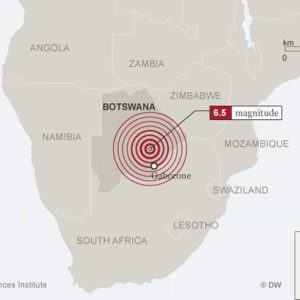
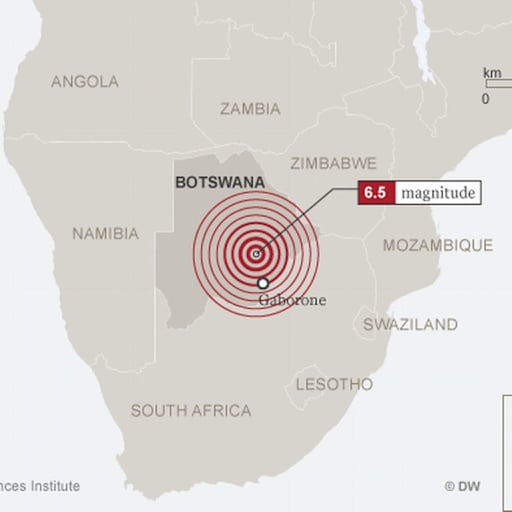
On April 3, 2017, Botswana was struck by a magnitude 6.5 earthquake, the second‑largest in the country’s recorded history. Gravity‑based crustal‑thickness modeling shows that the quake occurred in a zone of relatively thin crust (~40 km) along the edge of the Kaapvaal Craton, leading geophysicists to conclude that this region is a likely site of tectonic reactivation under extensional stresses.
Another major April 3 event is the start of the Jeju April 3 (4·3) Uprising and Massacre in South Korea, a period of state violence from 1948 to 1954 in which tens of thousands of civilians on Jeju Island were killed amid anti‑communist suppression campaigns. Recent work on “archivization” and transitional justice traces how post‑1980s investigations, truth commissions, and memorial projects have tried to document what happened and integrate it into South Korea’s official history.
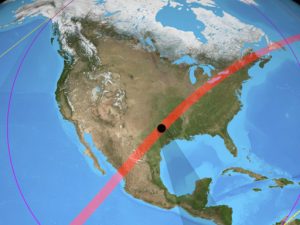
A map marking the epicenter of the 2017 Botswana earthquake highlights how an area once thought stable revealed hidden seismic vulnerability on April 3.
Who is associated with this date
April 3 is closely associated with the victims and survivors of the Jeju 4·3 events, as well as activists and scholars who have fought to uncover the truth. Transitional‑justice studies emphasize how families of the disappeared, local researchers, and state commissions worked together to collect testimonies, open archives, and push for reparations, making Jeju 4·3 a key case in East Asian memory politics.
In medical history, April 3, 2006 marks publication of the final part of Daniel Steinberg’s interpretive history of the cholesterol controversy, which described the discovery of statins and the decisive clinical trials that ended serious scientific doubt about the role of LDL cholesterol in coronary heart disease. These reviews argue that large randomized statin trials showed substantial reductions in heart‑disease morbidity and mortality, turning LDL lowering into a central global public‑health goal.
Rows of gravestones at the Jeju April 3 memorial site visually convey the scale of civilian loss that began on and around April 3, 1948.
Whose day / name day
In South Korea, April 3 is observed as Jeju 4·3 Peace Day, dedicated to remembering those killed or disappeared during the uprising and massacre. Ceremonies, exhibitions, and educational events on Jeju and across the country stress themes of truth, reconciliation, and the dangers of state violence under the guise of anti‑communism.
Christian saint‑ and name‑day calendars for April 3 vary by country and denomination, so the specific names honored on this date depend on local traditions. Scholars of commemoration note that days like April 3 gradually acquire layered meanings—religious, national, and personal—which help societies process both natural disasters, like the Botswana earthquake, and human‑made tragedies, like Jeju 4·3.
People gathering with flowers at the Jeju 4·3 gravesite show how April 3 has become a living day of mourning, apology, and ongoing dialogue in South Korea.
Horoscope for April 3, 2026
Astrologers usually describe April 3, 2026 as a serious, memory‑rich day in Aries season, blending the sign’s drive with themes of hidden fault lines—whether in the earth, the state, or the body. Long‑term studies in stroke and cardiovascular disease show that after an initial event, recurrent vascular events and mortality remain high over nine years, especially in older adults and those with comorbidities, reinforcing astrological advice to treat early “warning quakes” in health and life as signals for sustained change, not one‑off fixes.
Typical themes by element are framed as:
-
Fire signs (Aries, Leo, Sagittarius): Strong urge to confront injustice or shake up stagnant situations; good for principled action, but important to avoid explosive, uncontrolled reactions that mimic earthquakes rather than constructive reform.
-
Earth signs (Taurus, Virgo, Capricorn): Favorable for structural work—checking finances, health metrics (especially cholesterol), and daily routines, then reinforcing weak spots before they “crack.”
-
Air signs (Gemini, Libra, Aquarius): Heightened interest in history, politics, and ethics; ideal for reading about Jeju 4·3, transitional justice, or scientific controversies, and for speaking carefully but clearly on difficult topics.
-
Water signs (Cancer, Scorpio, Pisces): Deep emotional sensitivity; a good day for mourning, therapy, or spiritual practice that acknowledges inherited trauma while seeking healing instead of repeating cycles of silence or denial.
Astrologers often summarize April 3, 2026 as a day to face fault lines with courage: recognize where pressure has been silently building—in relationships, health, or society—and take one deliberate, compassionate step that relieves strain and honors both the living and the dead.
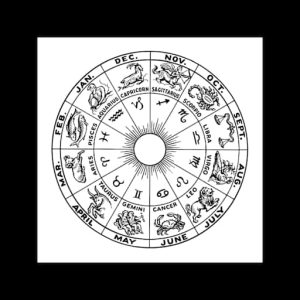
A vintage‑style zodiac wheel with April highlighted mirrors the mix of historical depth and forward motion astrologers associate with April 3, 2026.